
Originally posted on 10 August 2021, updated on 4 December 2024
Fires are separated into different classes according to the fuel that is burning with each requiring a different type of extinguisher to suppress the flames. Class F fires are particularly common and these are the type that we are going to look at in detail here.
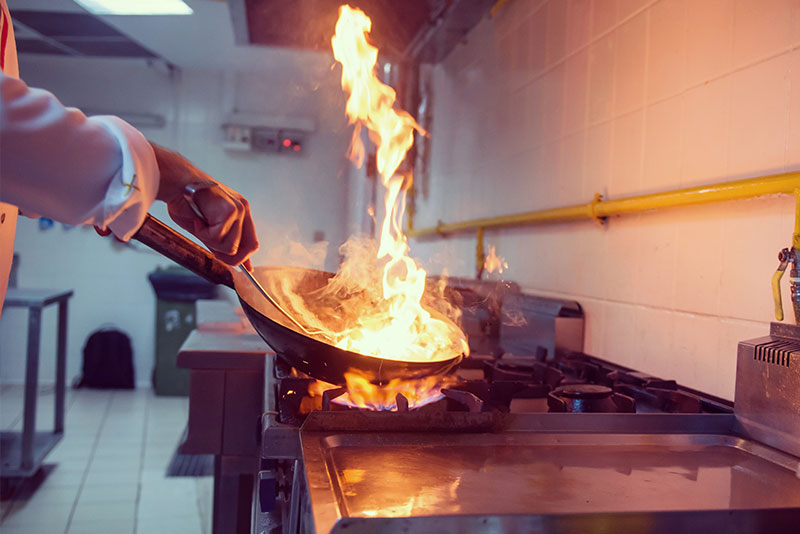
Class F fires are caused by the ignition of cooking oils and fats. These fires occur when the oils or fats reach their flash point, which is around 315 degrees. Once they reach around 340 degrees, cooking oils and fats can achieve auto-ignition and these fires are extremely dangerous with the potential to spread very quickly.
The majority of fires in the home are caused by cooking and quite often it is down to either the oils and fats catching fire or items being left unattended on the lit hob.
When this happens the consequences can be disastrous and it's vitally important that you know what to do - and what not to do - should a Class F fire start.
How to suppress Class F fires
To extinguish a Class F fire, you will need to use a Wet Chemical Extinguisher. Every other type of extinguisher is unsuitable for this type of fire and using any other fire extinguisher to tackle these incidents can be incredibly dangerous.
The wet chemical extinguisher works by forming a layer on top of the burning oil which prevents oxygen from reaching and worsening the fire.
When using a wet chemical extinguisher, it is important to remain a safe distance from the actual fire itself and position the extinguisher above the flames, squeeze the lever to release the chemical spray allowing it to fall onto the fire from above. This will suffocate the fire and reduce the flame.
How to minimise the risk of a Class F fire
Class F fires are particularly common in domestic and commercial kitchens. To try and minimise the risk of this type of fire breaking out it is vital that any pans of hot oil or fat are not left unattended, and any spillages should be cleaned up as quickly as possible, too.
When cooking with oils and fats, make sure open flames and hobs are turned off when they are no longer needed. While these may not result in a Class F fire, they can easily turn into fires of other classifications.
The Firechief® range includes high-performance wet chemical fire extinguishers suitable for tackling Class F fires, as well as fire blankets, first aid kits and the Kitchen Stove Guard which can cut power to the hob before a fire starts. For more information, call us on +44 (0)330 999 0019 or email sales@firechiefglobal.com.
Disclaimer
The information contained within this blog is provided solely for general informational and educational purposes and is not intended as a substitute for professional advice. Before taking any actions based upon this information, we advise the reader to consult any and all relevant statutory or regulatory guidance and where felt necessary to consult a qualified fire or industry regulation professional. The use or reliance on any information contained herein is solely at the reader's risk.